Penticton Mid-Construction Blower-Door Test
Book Penticton’s mid-construction blower-door test before the insulation and vapour-barrier inspection. See what must be ready and what Apollo provides.
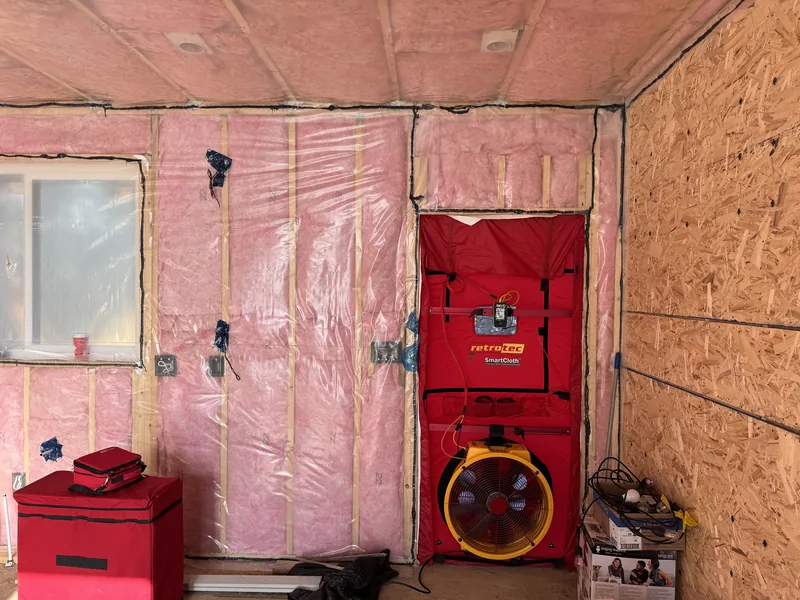
The City of Penticton requires a mid-construction blower door test (pre-drywall test) and Mid-Construction Compliance Report before the insulation and vapour-barrier inspection for Part 9 Step Code projects. Book the visit after the primary air barrier is installed and while its details are still visible.
Book the visit while the primary air barrier is exposed. Leakage found after drywall costs more to reach; leakage found now can be sealed by the crew during the test.
I identify leakage with the site team so the crew can seal accessible areas during the visit. The test gives the team practical feedback on the air barrier and shows whether the home is tracking toward the final airtightness target.
Send the address, permit number if available, target insulation-inspection date, site contact, and current City forms. Use the site-readiness checklist before the visit. I provide a leakage list and Mid-Construction Verification Report. The final test is still required for the as-built report.
The City’s Green Build page and Part 9 bulletin describe the current mid-construction requirement. Confirm that the forms are current before the inspection.
Make the building ready to hold pressure.
- Exterior windows and doors installed, latched, and weatherstripped enough for testing
- Primary air barrier installed, continuous, and still visible for repairs
- Major envelope penetrations roughed in, sealed, or ready for temporary closure
- Temporary construction openings identified before the visit
- Safe access to likely leakage areas
- Builder, site lead, or insulator available for the leakage walk-through
Put the result in the active permit package.
- Preliminary airtightness result and testing context
- Leakage observations and repairs completed during the visit
- Mid-construction report for the builder or applicant
- Notes carried forward to the final airtightness test
Questions about this stage.
When should a Penticton mid-construction blower-door test happen?
Book it after the primary air barrier is installed and before insulation, vapour barrier, drywall, or board covers the details that may need correction.
What does the builder need ready?
Exterior openings, windows, doors, major penetrations, attic hatches, and temporary construction openings should be closed enough for the building to hold pressure.
What do you provide after the visit?
I provide the preliminary airtightness result, a leakage list, and the Mid-Construction Verification Report.
Does this replace the final airtightness test?
No. The mid-construction visit helps find and correct leakage early. The final airtightness test is still required for the occupancy package.
Send the drawings. Get a straight answer.
Send me the plans and whatever information you have. I'll take a look and get back to you with a quote.